
Basketball Workout Program: Different Methods, Better Results

When implementing different methods to achieve better results, basketball workout programs must include many training methods that are comparable and transferable to other training methods for other sports. As a trainer, if you look at the biomechanics of the athlete and the dynamics of the game today, you will see that basketball athletes need to be as flexible, strong, powerful, explosive and fast as athletes in other sport. In today’s game of basketball, athletes are getting better by the hour with new innovative training methods being implemented by excellent trainers; and the time taken to develop those skills with high-intensity exercise is benefitting basketball players.
When talking about matching up with your competition, literally and figuratively, trying to improve your strength, quickness and vertical jump is the least you can do to compete and make it in any basketball league on any level. We are in a new age of training for basketball athletes, which encompasses various types of mobility drills, dynamic warm-ups, and strength, power and explosive movements that improve strength, quickness, vertical leap and other important attributes of the game.
More than anything, the basketball athlete’s program must include Olympic lifts and pushing and pulling exercises that correlate effectively. Basketball programs should encompass agility work to improve explosive quickness on the court. These can be performed on the court, but a grass field is a great option to relieve stress on joints and improve landing mechanics.
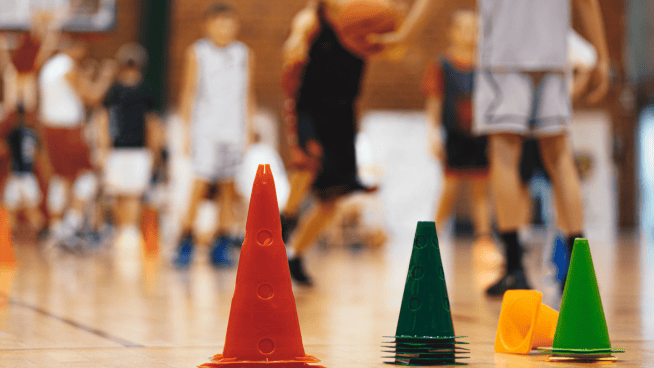
In comparison, agility drills on the court should consist of moving without the ball (through cones, chairs and other obstacles). These allow athletes to work physically and mentally through game situations, such as fighting through picks.
[youtube video=”FYYN045Saf0″ /]When developing a training program for basketball athletes, various modalities and methods should be taken into consideration to train the anaerobic pathways that will help the athlete dominate the court. Also, trainers need to look at whether they are programming low-intensity work. Low-intensity work is not compatible with high intensity work, because low-intensity work impairs recovery times from high-intensity exercises.
Work-to-rest ratios are important, because basketball is a discontinuance sport, meaning there are starts, stops, sprints, easy jogs, walking and changes of direction. The distance traveled on the court for pro athletes is 3,000m. Do the calculation for the level of basketball you coach, and develop your training program based on it.
Below is a template for week of sample off-season workouts. They can also be performed in-season, scaled back to fit around when games are played. Of course, athletes have to meet the standard in their progression checklist before moving on.
Training Program Template
Monday
- Dynamic Warm-up Phase 1
- Stick Work
- Jump Rope Complex
- Big Tire Flips (6-7)
- Sled Pushes (4 plates x10)
- Hurdle Jumps (5) to Dog Sled Pushes (2 plates)
- Hurdle Jumps (5) to Dog Sled Pushes (2 plates)
- Seated Hurdle Jumps to Box Jumps (5) to Sled Pushes (2 plates)
- Seated Hurdle Jumps (5) to Ball Push Press (2) to Sled Pushes (2)
- Seated Hurdle Jumps (5) to Sprints (Full Court)
- Recovery and regeneration (micro-stretching)
Tuesday
- Dynamic Warm-Up Phase 2
- Stick Work
- Jump Rope Complex
- Burpee Box Jumps (10) to Med Ball Sprints (full court down and back) x 3
- Front Squat (5×5) to Deadlift (1×4) (use 1RM or weight you can work with through progression)
- Recovery and regeneration (Band Stretching and Foam Rolling)
Wednesday
- Stick Work
- Hang Clean Practice 2x1RM
- Plank Complex and Sprint Work (refer to video)
- Speed Drills on Court or Outside
- Recovery and regeneration (Band Stretching and Foam Rolling)
Thursday
- Dynamic Warm-up Phase 1
- Stick Work
- Jump Rope Complex
Repeat the following circuit for 40 minutes:
- Weighted Vest Jump Pull-Ups (15)
- Landmine Reverse Lunge to Press (10)
- Plate Carries (walk or run full court and stack plates from largest to smallest, then sprint back to where you started)
- Recovery and regeneration (Band Stretching Shoulders and Foam Rolling)
Friday
- Banded Shoulder Work
- Stick Work
- Various Pull-Up Progressions (20+)
- Deadlifts (work to 1RM)
- Recovery and regeneration (Band Stretching Shoulders, Foam Rolling and micro-stretching)
Perform Sprints, Hill Sprints and/or Stair Runs following each session, depending on the volume of work performed and the mood of the athlete.
This training program is based on the aspect of the game being played, how mentally and physically strong the athletes need to be to compete in the game of basketball. Every exercise listed can be tailored to fit your team’s needs; however, everything needs to be performed at game speed and with good form. If your work capacity is not efficient to handle bouts of exhaustive energy expenditure, do not attempt to perform these exercises.
RECOMMENDED FOR YOU



MOST POPULAR




Basketball Workout Program: Different Methods, Better Results
When implementing different methods to achieve better results, basketball workout programs must include many training methods that are comparable and transferable to other training methods for other sports. As a trainer, if you look at the biomechanics of the athlete and the dynamics of the game today, you will see that basketball athletes need to be as flexible, strong, powerful, explosive and fast as athletes in other sport. In today’s game of basketball, athletes are getting better by the hour with new innovative training methods being implemented by excellent trainers; and the time taken to develop those skills with high-intensity exercise is benefitting basketball players.
When talking about matching up with your competition, literally and figuratively, trying to improve your strength, quickness and vertical jump is the least you can do to compete and make it in any basketball league on any level. We are in a new age of training for basketball athletes, which encompasses various types of mobility drills, dynamic warm-ups, and strength, power and explosive movements that improve strength, quickness, vertical leap and other important attributes of the game.
More than anything, the basketball athlete’s program must include Olympic lifts and pushing and pulling exercises that correlate effectively. Basketball programs should encompass agility work to improve explosive quickness on the court. These can be performed on the court, but a grass field is a great option to relieve stress on joints and improve landing mechanics.
[youtube video=”qVVGQD7NR94″ /]In comparison, agility drills on the court should consist of moving without the ball (through cones, chairs and other obstacles). These allow athletes to work physically and mentally through game situations, such as fighting through picks.
[youtube video=”FYYN045Saf0″ /]When developing a training program for basketball athletes, various modalities and methods should be taken into consideration to train the anaerobic pathways that will help the athlete dominate the court. Also, trainers need to look at whether they are programming low-intensity work. Low-intensity work is not compatible with high intensity work, because low-intensity work impairs recovery times from high-intensity exercises.
Work-to-rest ratios are important, because basketball is a discontinuance sport, meaning there are starts, stops, sprints, easy jogs, walking and changes of direction. The distance traveled on the court for pro athletes is 3,000m. Do the calculation for the level of basketball you coach, and develop your training program based on it.
Below is a template for week of sample off-season workouts. They can also be performed in-season, scaled back to fit around when games are played. Of course, athletes have to meet the standard in their progression checklist before moving on.
Training Program Template
Monday
- Dynamic Warm-up Phase 1
- Stick Work
- Jump Rope Complex
- Big Tire Flips (6-7)
- Sled Pushes (4 plates x10)
- Hurdle Jumps (5) to Dog Sled Pushes (2 plates)
- Hurdle Jumps (5) to Dog Sled Pushes (2 plates)
- Seated Hurdle Jumps to Box Jumps (5) to Sled Pushes (2 plates)
- Seated Hurdle Jumps (5) to Ball Push Press (2) to Sled Pushes (2)
- Seated Hurdle Jumps (5) to Sprints (Full Court)
- Recovery and regeneration (micro-stretching)
Tuesday
- Dynamic Warm-Up Phase 2
- Stick Work
- Jump Rope Complex
- Burpee Box Jumps (10) to Med Ball Sprints (full court down and back) x 3
- Front Squat (5×5) to Deadlift (1×4) (use 1RM or weight you can work with through progression)
- Recovery and regeneration (Band Stretching and Foam Rolling)
Wednesday
- Stick Work
- Hang Clean Practice 2x1RM
- Plank Complex and Sprint Work (refer to video)
- Speed Drills on Court or Outside
- Recovery and regeneration (Band Stretching and Foam Rolling)
Thursday
- Dynamic Warm-up Phase 1
- Stick Work
- Jump Rope Complex
Repeat the following circuit for 40 minutes:
- Weighted Vest Jump Pull-Ups (15)
- Landmine Reverse Lunge to Press (10)
- Plate Carries (walk or run full court and stack plates from largest to smallest, then sprint back to where you started)
- Recovery and regeneration (Band Stretching Shoulders and Foam Rolling)
Friday
- Banded Shoulder Work
- Stick Work
- Various Pull-Up Progressions (20+)
- Deadlifts (work to 1RM)
- Recovery and regeneration (Band Stretching Shoulders, Foam Rolling and micro-stretching)
Perform Sprints, Hill Sprints and/or Stair Runs following each session, depending on the volume of work performed and the mood of the athlete.
This training program is based on the aspect of the game being played, how mentally and physically strong the athletes need to be to compete in the game of basketball. Every exercise listed can be tailored to fit your team’s needs; however, everything needs to be performed at game speed and with good form. If your work capacity is not efficient to handle bouts of exhaustive energy expenditure, do not attempt to perform these exercises.