
Understand Overtraining to Avoid Performance Declines
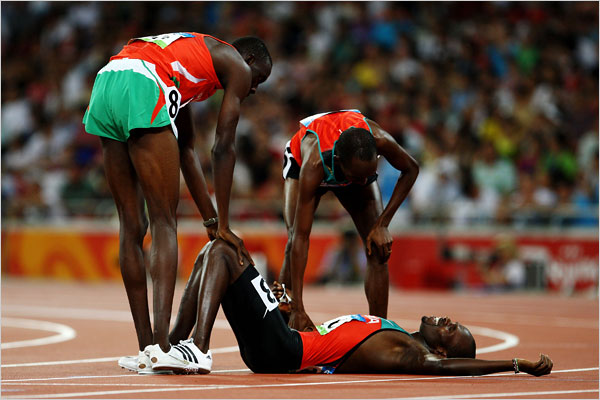
As a competitive athlete, your goal is to take your performance to the next level, which is why you spend hours training or playing your sport year-round. The problem with this “more is better” philosophy is that you may sabotage your performance by overtraining.
In an article published in the Strength and Conditioning Journal, Dr. Matthew Kutz describes overtraining as “an accumulation of training and/or nontraining stress resulting in long-term decrement in performance capacity.”
Put simply: Too much training or sports competition produces stress and exhaustion, which cause the body to break down. Symptoms of overtraining include fatigue, irritability, disturbed sleep, loss of appetite, depression, decreased immune system and increased chance of injury.
Kutz says one of the first signs of overtraining is staleness—i.e., loss of performance or inability to make training gains. When your training performance lags behind your expectations, you may be tempted to power through the slump. Bad idea. It may cause you to spiral into overtraining, burn out or even stop playing your favorite sport.
To avoid overtraining, focus on recovery—whether from a long tough season or a strenuous workout. Follow the recovery guidelines below to continue making safe and effective performance gains:
- Perform in-season workouts one to two days per week with light to moderate loads for maintenance and injury prevention
- Perform off-season workouts between three and five days per week
- Wait at least 24 hours—and preferably 48 hours—before reworking a muscle group
- Vary your training program with different weight loads, sets, reps and rest to stimulate muscle development
- Avoid always lifting near max capacity by integrating light- and moderate-load workouts
- Record workout progress to identify performance declines and begin recovery before overtraining sets in
- Multi-sport athletes should recover after each season with rest and recreational activities to relieve physical and emotional stress
Source: Kutz, M. P. [2009]. “Contributing Factors to Overtraining in the Adolescent Multi-Season/Sport Athlete.” Strength and Conditioning Journal , 31 [3], 37-42.
Photo: runningmechanics.com
RECOMMENDED FOR YOU




MOST POPULAR




Understand Overtraining to Avoid Performance Declines
As a competitive athlete, your goal is to take your performance to the next level, which is why you spend hours training or playing your sport year-round. The problem with this “more is better” philosophy is that you may sabotage your performance by overtraining.
In an article published in the Strength and Conditioning Journal, Dr. Matthew Kutz describes overtraining as “an accumulation of training and/or nontraining stress resulting in long-term decrement in performance capacity.”
Put simply: Too much training or sports competition produces stress and exhaustion, which cause the body to break down. Symptoms of overtraining include fatigue, irritability, disturbed sleep, loss of appetite, depression, decreased immune system and increased chance of injury.
Kutz says one of the first signs of overtraining is staleness—i.e., loss of performance or inability to make training gains. When your training performance lags behind your expectations, you may be tempted to power through the slump. Bad idea. It may cause you to spiral into overtraining, burn out or even stop playing your favorite sport.
To avoid overtraining, focus on recovery—whether from a long tough season or a strenuous workout. Follow the recovery guidelines below to continue making safe and effective performance gains:
- Perform in-season workouts one to two days per week with light to moderate loads for maintenance and injury prevention
- Perform off-season workouts between three and five days per week
- Wait at least 24 hours—and preferably 48 hours—before reworking a muscle group
- Vary your training program with different weight loads, sets, reps and rest to stimulate muscle development
- Avoid always lifting near max capacity by integrating light- and moderate-load workouts
- Record workout progress to identify performance declines and begin recovery before overtraining sets in
- Multi-sport athletes should recover after each season with rest and recreational activities to relieve physical and emotional stress
Source: Kutz, M. P. [2009]. “Contributing Factors to Overtraining in the Adolescent Multi-Season/Sport Athlete.” Strength and Conditioning Journal , 31 [3], 37-42.
Photo: runningmechanics.com